From AI Content to AI Search: 5 Forces That Shaped Health & Wellness Marketing in 2025
.webp)
If 2024 was the year health and wellness brands experimented with new channels and new AI tools, 2025 was the year those experiments became operating models. The “how” of marketing changed, not just the “where.”
The result was a familiar tension for category leaders. Growth still demands speed and scale, but health and wellness demands trust. In 2025, brands that treated trust as a growth lever, not a compliance tax, pulled ahead.
Here are the five shifts that mattered most in 2025, plus how they are likely to shape 2026.
1) GenAI scaled content output, and raised the bar for credibility
What happened in 2025: Generative AI moved from isolated use cases to daily production. Teams used it to generate more creative versions, faster landing page iteration, more email and SMS variants, and faster testing cycles.
How it affected health and wellness: In this category, “generic” content is not neutral. It is risky. Consumers are sensitive to vague claims, inconsistent messaging, and content that feels mass-produced. The brands that won did not just increase volume. They paired AI speed with a stronger review workflow, clearer substantiation, and more authentic formats, including practitioner-led education, creator partnerships, and outcomes-driven storytelling.
What it means for 2026: AI will keep improving, but differentiation will come from what your brand can say that others cannot. Invest in an advantage that compounds: proprietary insights, clinical or expert review processes, and a content system that produces not just more assets, but better proof.
2026 move: Build a governed content factory. Standardize prompts, claims libraries, and approval paths so iteration speeds up without creating brand or regulatory exposure.
2) Answer-first search changed discovery, especially top of funnel
What happened in 2025: Search increasingly behaved like an answer engine. AI summaries and “best of” answers reduced the number of clicks available for broad informational queries.
How it affected health and wellness: Many high-volume discovery searches in this category are informational: symptoms, routines, ingredients, comparisons, and safety questions. As AI answers absorbed more of that intent, traditional SEO tactics lost leverage. Brands felt the pressure as impressions stayed strong but traffic became less dependable.
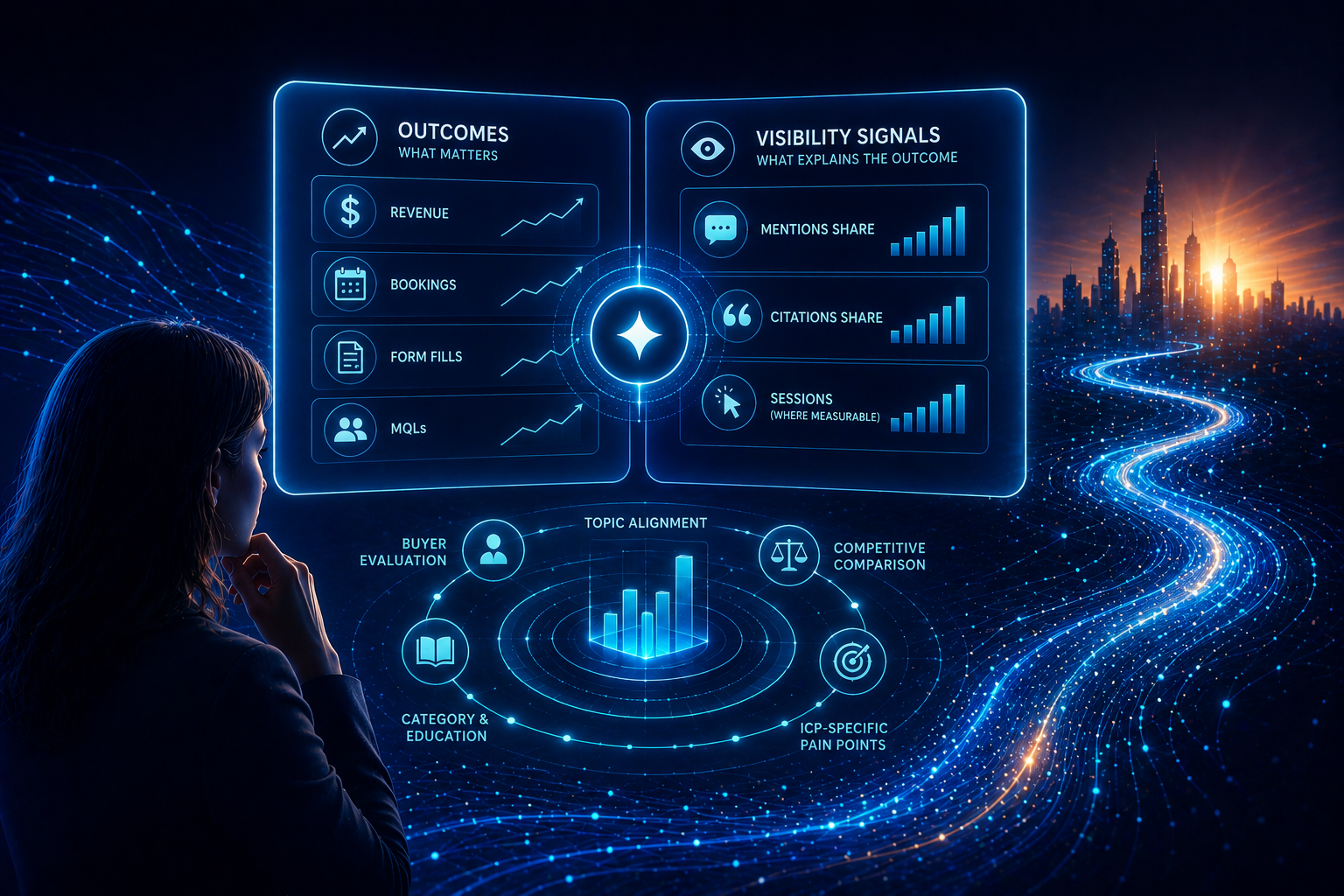
The bright spot was visibility inside the answer itself. Brands with clear expertise signals, structured content, and reliable sourcing became more likely to be referenced and trusted.
What it means for 2026: You will be optimizing for inclusion and trust, not just rank. That means clearer authorship, stronger E-E-A-T signals, structured pages, and content that is designed to be summarized accurately.
2026 move: Treat “AI search visibility” as its own program. Identify your highest-value question clusters, build authoritative cornerstone pages, add structured data where appropriate, and integrate PR and expert validation into your content plan.
3) Retail media kept pulling spend, and pushed brands toward full-funnel discipline
What happened in 2025: Retail media continued to expand, and for many wellness brands it became a primary growth channel. It offered strong shopper intent signals close to purchase, with measurable outcomes.
How it affected health and wellness: The opportunity was real, but so was the tradeoff. Reporting fragmentation across networks, inconsistent measurement, and performance incentives that favor short-term conversion can weaken brand equity over time. In a trust-driven category, that creates risk. “Winning the auction” is not the same as winning the customer.
What it means for 2026: Retail media will still grow, but leadership teams will demand higher-quality measurement and more brand-connected strategy. Networks and partners that can prove incrementality and support full-funnel outcomes will earn more budget.
2026 move: Define your retail media role in the mix. Clarify what it is responsible for (new customer acquisition, category defense, launch support, retention) and build a measurement plan that tests incrementality, not just ROAS.
4) Privacy and signal loss reinforced the value of owned audiences
What happened in 2025: Measurement and targeting continued to fragment. Even without a single clean “cookieless moment,” marketers operated with uneven visibility and more reliance on modeled performance.
How it affected health and wellness: Brands leaned into first-party data strategies that fit the category: subscriptions, replenishment programs, loyalty, quizzes, guided product finders, and educational experiences that earn consent. These approaches improved lifecycle performance and reduced dependency on paid acquisition volatility.
What it means for 2026: Owned audiences will become more central to growth planning, not just retention planning. The brands that build strong identity, consent, and messaging systems will have more options when platforms change.
2026 move: Treat first-party as a product, not a project. Map your data capture to real customer value (education, personalization, savings, convenience) and connect it to a lifecycle program that is measured and continuously improved.
5) Governance became a competitive advantage, not a constraint
What happened in 2025: AI usage, ad platform policies, and category claim scrutiny pushed teams to formalize guardrails. Many brands realized that governance is what makes speed safe.
How it affected health and wellness: This category lives under a microscope. Teams that tightened claims substantiation, disclosures, and review workflows could move faster with fewer rollbacks and fewer performance disruptions.
What it means for 2026: Governance will become normal. The advantage will go to brands that make governance lightweight, embedded, and consistent across teams and partners.
2026 move: Create a marketing governance playbook that covers AI usage, claims substantiation, influencer guidelines, and a consistent review path. Then operationalize it so it reduces friction instead of adding it.
What senior leaders should prioritize in 2026
If you want a practical year-start checklist, focus here:
- Build a governed AI production system (prompts, claims library, approvals, brand voice standards).
- Shift SEO to “answer visibility” (authority, structure, expert content, reliable sourcing).
- Run retail media like a portfolio (roles by network, incrementality testing, creative discipline).
- Grow owned audiences with a value exchange (education, personalization, convenience).
- Unify measurement with experiments (incrementality, holdouts, and reality-based forecasting).
In 2026, the brands that win will not be the ones that simply produce more. They will be the ones that build trust at scale, and then measure it with discipline.
The common thread across all five shifts is that health and wellness brands will win in 2026 by building trust at scale and proving impact with rigor. That requires more than quick tactics or more content. It takes a system that connects credible creative, AI-era visibility, privacy-aware measurement, and full-funnel performance. Overdrive helps health and wellness teams build that system, from strategy and messaging through execution and measurement, so growth is both faster and safer. If you want to pressure-test your 2026 plan and prioritize the opportunities that will matter most, we would love to compare notes.


From AI Content to AI Search: 5 Forces That Shaped Health & Wellness Marketing in 2025
Download the guide to:
If 2024 was the year health and wellness brands experimented with new channels and new AI tools, 2025 was the year those experiments became operating models. The “how” of marketing changed, not just the “where.”
The result was a familiar tension for category leaders. Growth still demands speed and scale, but health and wellness demands trust. In 2025, brands that treated trust as a growth lever, not a compliance tax, pulled ahead.
Here are the five shifts that mattered most in 2025, plus how they are likely to shape 2026.
1) GenAI scaled content output, and raised the bar for credibility
What happened in 2025: Generative AI moved from isolated use cases to daily production. Teams used it to generate more creative versions, faster landing page iteration, more email and SMS variants, and faster testing cycles.
How it affected health and wellness: In this category, “generic” content is not neutral. It is risky. Consumers are sensitive to vague claims, inconsistent messaging, and content that feels mass-produced. The brands that won did not just increase volume. They paired AI speed with a stronger review workflow, clearer substantiation, and more authentic formats, including practitioner-led education, creator partnerships, and outcomes-driven storytelling.
What it means for 2026: AI will keep improving, but differentiation will come from what your brand can say that others cannot. Invest in an advantage that compounds: proprietary insights, clinical or expert review processes, and a content system that produces not just more assets, but better proof.
2026 move: Build a governed content factory. Standardize prompts, claims libraries, and approval paths so iteration speeds up without creating brand or regulatory exposure.
2) Answer-first search changed discovery, especially top of funnel
What happened in 2025: Search increasingly behaved like an answer engine. AI summaries and “best of” answers reduced the number of clicks available for broad informational queries.
How it affected health and wellness: Many high-volume discovery searches in this category are informational: symptoms, routines, ingredients, comparisons, and safety questions. As AI answers absorbed more of that intent, traditional SEO tactics lost leverage. Brands felt the pressure as impressions stayed strong but traffic became less dependable.
The bright spot was visibility inside the answer itself. Brands with clear expertise signals, structured content, and reliable sourcing became more likely to be referenced and trusted.
What it means for 2026: You will be optimizing for inclusion and trust, not just rank. That means clearer authorship, stronger E-E-A-T signals, structured pages, and content that is designed to be summarized accurately.
2026 move: Treat “AI search visibility” as its own program. Identify your highest-value question clusters, build authoritative cornerstone pages, add structured data where appropriate, and integrate PR and expert validation into your content plan.
3) Retail media kept pulling spend, and pushed brands toward full-funnel discipline
What happened in 2025: Retail media continued to expand, and for many wellness brands it became a primary growth channel. It offered strong shopper intent signals close to purchase, with measurable outcomes.
How it affected health and wellness: The opportunity was real, but so was the tradeoff. Reporting fragmentation across networks, inconsistent measurement, and performance incentives that favor short-term conversion can weaken brand equity over time. In a trust-driven category, that creates risk. “Winning the auction” is not the same as winning the customer.
What it means for 2026: Retail media will still grow, but leadership teams will demand higher-quality measurement and more brand-connected strategy. Networks and partners that can prove incrementality and support full-funnel outcomes will earn more budget.
2026 move: Define your retail media role in the mix. Clarify what it is responsible for (new customer acquisition, category defense, launch support, retention) and build a measurement plan that tests incrementality, not just ROAS.
4) Privacy and signal loss reinforced the value of owned audiences
What happened in 2025: Measurement and targeting continued to fragment. Even without a single clean “cookieless moment,” marketers operated with uneven visibility and more reliance on modeled performance.
How it affected health and wellness: Brands leaned into first-party data strategies that fit the category: subscriptions, replenishment programs, loyalty, quizzes, guided product finders, and educational experiences that earn consent. These approaches improved lifecycle performance and reduced dependency on paid acquisition volatility.
What it means for 2026: Owned audiences will become more central to growth planning, not just retention planning. The brands that build strong identity, consent, and messaging systems will have more options when platforms change.
2026 move: Treat first-party as a product, not a project. Map your data capture to real customer value (education, personalization, savings, convenience) and connect it to a lifecycle program that is measured and continuously improved.
5) Governance became a competitive advantage, not a constraint
What happened in 2025: AI usage, ad platform policies, and category claim scrutiny pushed teams to formalize guardrails. Many brands realized that governance is what makes speed safe.
How it affected health and wellness: This category lives under a microscope. Teams that tightened claims substantiation, disclosures, and review workflows could move faster with fewer rollbacks and fewer performance disruptions.
What it means for 2026: Governance will become normal. The advantage will go to brands that make governance lightweight, embedded, and consistent across teams and partners.
2026 move: Create a marketing governance playbook that covers AI usage, claims substantiation, influencer guidelines, and a consistent review path. Then operationalize it so it reduces friction instead of adding it.
What senior leaders should prioritize in 2026
If you want a practical year-start checklist, focus here:
- Build a governed AI production system (prompts, claims library, approvals, brand voice standards).
- Shift SEO to “answer visibility” (authority, structure, expert content, reliable sourcing).
- Run retail media like a portfolio (roles by network, incrementality testing, creative discipline).
- Grow owned audiences with a value exchange (education, personalization, convenience).
- Unify measurement with experiments (incrementality, holdouts, and reality-based forecasting).
In 2026, the brands that win will not be the ones that simply produce more. They will be the ones that build trust at scale, and then measure it with discipline.
The common thread across all five shifts is that health and wellness brands will win in 2026 by building trust at scale and proving impact with rigor. That requires more than quick tactics or more content. It takes a system that connects credible creative, AI-era visibility, privacy-aware measurement, and full-funnel performance. Overdrive helps health and wellness teams build that system, from strategy and messaging through execution and measurement, so growth is both faster and safer. If you want to pressure-test your 2026 plan and prioritize the opportunities that will matter most, we would love to compare notes.

From AI Content to AI Search: 5 Forces That Shaped Health & Wellness Marketing in 2025
Download the guide to:
If 2024 was the year health and wellness brands experimented with new channels and new AI tools, 2025 was the year those experiments became operating models. The “how” of marketing changed, not just the “where.”
The result was a familiar tension for category leaders. Growth still demands speed and scale, but health and wellness demands trust. In 2025, brands that treated trust as a growth lever, not a compliance tax, pulled ahead.
Here are the five shifts that mattered most in 2025, plus how they are likely to shape 2026.
1) GenAI scaled content output, and raised the bar for credibility
What happened in 2025: Generative AI moved from isolated use cases to daily production. Teams used it to generate more creative versions, faster landing page iteration, more email and SMS variants, and faster testing cycles.
How it affected health and wellness: In this category, “generic” content is not neutral. It is risky. Consumers are sensitive to vague claims, inconsistent messaging, and content that feels mass-produced. The brands that won did not just increase volume. They paired AI speed with a stronger review workflow, clearer substantiation, and more authentic formats, including practitioner-led education, creator partnerships, and outcomes-driven storytelling.
What it means for 2026: AI will keep improving, but differentiation will come from what your brand can say that others cannot. Invest in an advantage that compounds: proprietary insights, clinical or expert review processes, and a content system that produces not just more assets, but better proof.
2026 move: Build a governed content factory. Standardize prompts, claims libraries, and approval paths so iteration speeds up without creating brand or regulatory exposure.
2) Answer-first search changed discovery, especially top of funnel
What happened in 2025: Search increasingly behaved like an answer engine. AI summaries and “best of” answers reduced the number of clicks available for broad informational queries.
How it affected health and wellness: Many high-volume discovery searches in this category are informational: symptoms, routines, ingredients, comparisons, and safety questions. As AI answers absorbed more of that intent, traditional SEO tactics lost leverage. Brands felt the pressure as impressions stayed strong but traffic became less dependable.
The bright spot was visibility inside the answer itself. Brands with clear expertise signals, structured content, and reliable sourcing became more likely to be referenced and trusted.
What it means for 2026: You will be optimizing for inclusion and trust, not just rank. That means clearer authorship, stronger E-E-A-T signals, structured pages, and content that is designed to be summarized accurately.
2026 move: Treat “AI search visibility” as its own program. Identify your highest-value question clusters, build authoritative cornerstone pages, add structured data where appropriate, and integrate PR and expert validation into your content plan.
3) Retail media kept pulling spend, and pushed brands toward full-funnel discipline
What happened in 2025: Retail media continued to expand, and for many wellness brands it became a primary growth channel. It offered strong shopper intent signals close to purchase, with measurable outcomes.
How it affected health and wellness: The opportunity was real, but so was the tradeoff. Reporting fragmentation across networks, inconsistent measurement, and performance incentives that favor short-term conversion can weaken brand equity over time. In a trust-driven category, that creates risk. “Winning the auction” is not the same as winning the customer.
What it means for 2026: Retail media will still grow, but leadership teams will demand higher-quality measurement and more brand-connected strategy. Networks and partners that can prove incrementality and support full-funnel outcomes will earn more budget.
2026 move: Define your retail media role in the mix. Clarify what it is responsible for (new customer acquisition, category defense, launch support, retention) and build a measurement plan that tests incrementality, not just ROAS.
4) Privacy and signal loss reinforced the value of owned audiences
What happened in 2025: Measurement and targeting continued to fragment. Even without a single clean “cookieless moment,” marketers operated with uneven visibility and more reliance on modeled performance.
How it affected health and wellness: Brands leaned into first-party data strategies that fit the category: subscriptions, replenishment programs, loyalty, quizzes, guided product finders, and educational experiences that earn consent. These approaches improved lifecycle performance and reduced dependency on paid acquisition volatility.
What it means for 2026: Owned audiences will become more central to growth planning, not just retention planning. The brands that build strong identity, consent, and messaging systems will have more options when platforms change.
2026 move: Treat first-party as a product, not a project. Map your data capture to real customer value (education, personalization, savings, convenience) and connect it to a lifecycle program that is measured and continuously improved.
5) Governance became a competitive advantage, not a constraint
What happened in 2025: AI usage, ad platform policies, and category claim scrutiny pushed teams to formalize guardrails. Many brands realized that governance is what makes speed safe.
How it affected health and wellness: This category lives under a microscope. Teams that tightened claims substantiation, disclosures, and review workflows could move faster with fewer rollbacks and fewer performance disruptions.
What it means for 2026: Governance will become normal. The advantage will go to brands that make governance lightweight, embedded, and consistent across teams and partners.
2026 move: Create a marketing governance playbook that covers AI usage, claims substantiation, influencer guidelines, and a consistent review path. Then operationalize it so it reduces friction instead of adding it.
What senior leaders should prioritize in 2026
If you want a practical year-start checklist, focus here:
- Build a governed AI production system (prompts, claims library, approvals, brand voice standards).
- Shift SEO to “answer visibility” (authority, structure, expert content, reliable sourcing).
- Run retail media like a portfolio (roles by network, incrementality testing, creative discipline).
- Grow owned audiences with a value exchange (education, personalization, convenience).
- Unify measurement with experiments (incrementality, holdouts, and reality-based forecasting).
In 2026, the brands that win will not be the ones that simply produce more. They will be the ones that build trust at scale, and then measure it with discipline.
The common thread across all five shifts is that health and wellness brands will win in 2026 by building trust at scale and proving impact with rigor. That requires more than quick tactics or more content. It takes a system that connects credible creative, AI-era visibility, privacy-aware measurement, and full-funnel performance. Overdrive helps health and wellness teams build that system, from strategy and messaging through execution and measurement, so growth is both faster and safer. If you want to pressure-test your 2026 plan and prioritize the opportunities that will matter most, we would love to compare notes.
From AI Content to AI Search: 5 Forces That Shaped Health & Wellness Marketing in 2025
Key Insights From Our Research
If 2024 was the year health and wellness brands experimented with new channels and new AI tools, 2025 was the year those experiments became operating models. The “how” of marketing changed, not just the “where.”
The result was a familiar tension for category leaders. Growth still demands speed and scale, but health and wellness demands trust. In 2025, brands that treated trust as a growth lever, not a compliance tax, pulled ahead.
Here are the five shifts that mattered most in 2025, plus how they are likely to shape 2026.
1) GenAI scaled content output, and raised the bar for credibility
What happened in 2025: Generative AI moved from isolated use cases to daily production. Teams used it to generate more creative versions, faster landing page iteration, more email and SMS variants, and faster testing cycles.
How it affected health and wellness: In this category, “generic” content is not neutral. It is risky. Consumers are sensitive to vague claims, inconsistent messaging, and content that feels mass-produced. The brands that won did not just increase volume. They paired AI speed with a stronger review workflow, clearer substantiation, and more authentic formats, including practitioner-led education, creator partnerships, and outcomes-driven storytelling.
What it means for 2026: AI will keep improving, but differentiation will come from what your brand can say that others cannot. Invest in an advantage that compounds: proprietary insights, clinical or expert review processes, and a content system that produces not just more assets, but better proof.
2026 move: Build a governed content factory. Standardize prompts, claims libraries, and approval paths so iteration speeds up without creating brand or regulatory exposure.
2) Answer-first search changed discovery, especially top of funnel
What happened in 2025: Search increasingly behaved like an answer engine. AI summaries and “best of” answers reduced the number of clicks available for broad informational queries.
How it affected health and wellness: Many high-volume discovery searches in this category are informational: symptoms, routines, ingredients, comparisons, and safety questions. As AI answers absorbed more of that intent, traditional SEO tactics lost leverage. Brands felt the pressure as impressions stayed strong but traffic became less dependable.
The bright spot was visibility inside the answer itself. Brands with clear expertise signals, structured content, and reliable sourcing became more likely to be referenced and trusted.
What it means for 2026: You will be optimizing for inclusion and trust, not just rank. That means clearer authorship, stronger E-E-A-T signals, structured pages, and content that is designed to be summarized accurately.
2026 move: Treat “AI search visibility” as its own program. Identify your highest-value question clusters, build authoritative cornerstone pages, add structured data where appropriate, and integrate PR and expert validation into your content plan.
3) Retail media kept pulling spend, and pushed brands toward full-funnel discipline
What happened in 2025: Retail media continued to expand, and for many wellness brands it became a primary growth channel. It offered strong shopper intent signals close to purchase, with measurable outcomes.
How it affected health and wellness: The opportunity was real, but so was the tradeoff. Reporting fragmentation across networks, inconsistent measurement, and performance incentives that favor short-term conversion can weaken brand equity over time. In a trust-driven category, that creates risk. “Winning the auction” is not the same as winning the customer.
What it means for 2026: Retail media will still grow, but leadership teams will demand higher-quality measurement and more brand-connected strategy. Networks and partners that can prove incrementality and support full-funnel outcomes will earn more budget.
2026 move: Define your retail media role in the mix. Clarify what it is responsible for (new customer acquisition, category defense, launch support, retention) and build a measurement plan that tests incrementality, not just ROAS.
4) Privacy and signal loss reinforced the value of owned audiences
What happened in 2025: Measurement and targeting continued to fragment. Even without a single clean “cookieless moment,” marketers operated with uneven visibility and more reliance on modeled performance.
How it affected health and wellness: Brands leaned into first-party data strategies that fit the category: subscriptions, replenishment programs, loyalty, quizzes, guided product finders, and educational experiences that earn consent. These approaches improved lifecycle performance and reduced dependency on paid acquisition volatility.
What it means for 2026: Owned audiences will become more central to growth planning, not just retention planning. The brands that build strong identity, consent, and messaging systems will have more options when platforms change.
2026 move: Treat first-party as a product, not a project. Map your data capture to real customer value (education, personalization, savings, convenience) and connect it to a lifecycle program that is measured and continuously improved.
5) Governance became a competitive advantage, not a constraint
What happened in 2025: AI usage, ad platform policies, and category claim scrutiny pushed teams to formalize guardrails. Many brands realized that governance is what makes speed safe.
How it affected health and wellness: This category lives under a microscope. Teams that tightened claims substantiation, disclosures, and review workflows could move faster with fewer rollbacks and fewer performance disruptions.
What it means for 2026: Governance will become normal. The advantage will go to brands that make governance lightweight, embedded, and consistent across teams and partners.
2026 move: Create a marketing governance playbook that covers AI usage, claims substantiation, influencer guidelines, and a consistent review path. Then operationalize it so it reduces friction instead of adding it.
What senior leaders should prioritize in 2026
If you want a practical year-start checklist, focus here:
- Build a governed AI production system (prompts, claims library, approvals, brand voice standards).
- Shift SEO to “answer visibility” (authority, structure, expert content, reliable sourcing).
- Run retail media like a portfolio (roles by network, incrementality testing, creative discipline).
- Grow owned audiences with a value exchange (education, personalization, convenience).
- Unify measurement with experiments (incrementality, holdouts, and reality-based forecasting).
In 2026, the brands that win will not be the ones that simply produce more. They will be the ones that build trust at scale, and then measure it with discipline.
The common thread across all five shifts is that health and wellness brands will win in 2026 by building trust at scale and proving impact with rigor. That requires more than quick tactics or more content. It takes a system that connects credible creative, AI-era visibility, privacy-aware measurement, and full-funnel performance. Overdrive helps health and wellness teams build that system, from strategy and messaging through execution and measurement, so growth is both faster and safer. If you want to pressure-test your 2026 plan and prioritize the opportunities that will matter most, we would love to compare notes.
From AI Content to AI Search: 5 Forces That Shaped Health & Wellness Marketing in 2025
Get the Complete Whitepaper
From AI Content to AI Search: 5 Forces That Shaped Health & Wellness Marketing in 2025
If 2024 was the year health and wellness brands experimented with new channels and new AI tools, 2025 was the year those experiments became operating models. The “how” of marketing changed, not just the “where.”
The result was a familiar tension for category leaders. Growth still demands speed and scale, but health and wellness demands trust. In 2025, brands that treated trust as a growth lever, not a compliance tax, pulled ahead.
Here are the five shifts that mattered most in 2025, plus how they are likely to shape 2026.
1) GenAI scaled content output, and raised the bar for credibility
What happened in 2025: Generative AI moved from isolated use cases to daily production. Teams used it to generate more creative versions, faster landing page iteration, more email and SMS variants, and faster testing cycles.
How it affected health and wellness: In this category, “generic” content is not neutral. It is risky. Consumers are sensitive to vague claims, inconsistent messaging, and content that feels mass-produced. The brands that won did not just increase volume. They paired AI speed with a stronger review workflow, clearer substantiation, and more authentic formats, including practitioner-led education, creator partnerships, and outcomes-driven storytelling.
What it means for 2026: AI will keep improving, but differentiation will come from what your brand can say that others cannot. Invest in an advantage that compounds: proprietary insights, clinical or expert review processes, and a content system that produces not just more assets, but better proof.
2026 move: Build a governed content factory. Standardize prompts, claims libraries, and approval paths so iteration speeds up without creating brand or regulatory exposure.
2) Answer-first search changed discovery, especially top of funnel
What happened in 2025: Search increasingly behaved like an answer engine. AI summaries and “best of” answers reduced the number of clicks available for broad informational queries.
How it affected health and wellness: Many high-volume discovery searches in this category are informational: symptoms, routines, ingredients, comparisons, and safety questions. As AI answers absorbed more of that intent, traditional SEO tactics lost leverage. Brands felt the pressure as impressions stayed strong but traffic became less dependable.
The bright spot was visibility inside the answer itself. Brands with clear expertise signals, structured content, and reliable sourcing became more likely to be referenced and trusted.
What it means for 2026: You will be optimizing for inclusion and trust, not just rank. That means clearer authorship, stronger E-E-A-T signals, structured pages, and content that is designed to be summarized accurately.
2026 move: Treat “AI search visibility” as its own program. Identify your highest-value question clusters, build authoritative cornerstone pages, add structured data where appropriate, and integrate PR and expert validation into your content plan.
3) Retail media kept pulling spend, and pushed brands toward full-funnel discipline
What happened in 2025: Retail media continued to expand, and for many wellness brands it became a primary growth channel. It offered strong shopper intent signals close to purchase, with measurable outcomes.
How it affected health and wellness: The opportunity was real, but so was the tradeoff. Reporting fragmentation across networks, inconsistent measurement, and performance incentives that favor short-term conversion can weaken brand equity over time. In a trust-driven category, that creates risk. “Winning the auction” is not the same as winning the customer.
What it means for 2026: Retail media will still grow, but leadership teams will demand higher-quality measurement and more brand-connected strategy. Networks and partners that can prove incrementality and support full-funnel outcomes will earn more budget.
2026 move: Define your retail media role in the mix. Clarify what it is responsible for (new customer acquisition, category defense, launch support, retention) and build a measurement plan that tests incrementality, not just ROAS.
4) Privacy and signal loss reinforced the value of owned audiences
What happened in 2025: Measurement and targeting continued to fragment. Even without a single clean “cookieless moment,” marketers operated with uneven visibility and more reliance on modeled performance.
How it affected health and wellness: Brands leaned into first-party data strategies that fit the category: subscriptions, replenishment programs, loyalty, quizzes, guided product finders, and educational experiences that earn consent. These approaches improved lifecycle performance and reduced dependency on paid acquisition volatility.
What it means for 2026: Owned audiences will become more central to growth planning, not just retention planning. The brands that build strong identity, consent, and messaging systems will have more options when platforms change.
2026 move: Treat first-party as a product, not a project. Map your data capture to real customer value (education, personalization, savings, convenience) and connect it to a lifecycle program that is measured and continuously improved.
5) Governance became a competitive advantage, not a constraint
What happened in 2025: AI usage, ad platform policies, and category claim scrutiny pushed teams to formalize guardrails. Many brands realized that governance is what makes speed safe.
How it affected health and wellness: This category lives under a microscope. Teams that tightened claims substantiation, disclosures, and review workflows could move faster with fewer rollbacks and fewer performance disruptions.
What it means for 2026: Governance will become normal. The advantage will go to brands that make governance lightweight, embedded, and consistent across teams and partners.
2026 move: Create a marketing governance playbook that covers AI usage, claims substantiation, influencer guidelines, and a consistent review path. Then operationalize it so it reduces friction instead of adding it.
What senior leaders should prioritize in 2026
If you want a practical year-start checklist, focus here:
- Build a governed AI production system (prompts, claims library, approvals, brand voice standards).
- Shift SEO to “answer visibility” (authority, structure, expert content, reliable sourcing).
- Run retail media like a portfolio (roles by network, incrementality testing, creative discipline).
- Grow owned audiences with a value exchange (education, personalization, convenience).
- Unify measurement with experiments (incrementality, holdouts, and reality-based forecasting).
In 2026, the brands that win will not be the ones that simply produce more. They will be the ones that build trust at scale, and then measure it with discipline.
The common thread across all five shifts is that health and wellness brands will win in 2026 by building trust at scale and proving impact with rigor. That requires more than quick tactics or more content. It takes a system that connects credible creative, AI-era visibility, privacy-aware measurement, and full-funnel performance. Overdrive helps health and wellness teams build that system, from strategy and messaging through execution and measurement, so growth is both faster and safer. If you want to pressure-test your 2026 plan and prioritize the opportunities that will matter most, we would love to compare notes.
From AI Content to AI Search: 5 Forces That Shaped Health & Wellness Marketing in 2025
Get the Slides
From AI Content to AI Search: 5 Forces That Shaped Health & Wellness Marketing in 2025
If 2024 was the year health and wellness brands experimented with new channels and new AI tools, 2025 was the year those experiments became operating models. The “how” of marketing changed, not just the “where.”
The result was a familiar tension for category leaders. Growth still demands speed and scale, but health and wellness demands trust. In 2025, brands that treated trust as a growth lever, not a compliance tax, pulled ahead.
Here are the five shifts that mattered most in 2025, plus how they are likely to shape 2026.
1) GenAI scaled content output, and raised the bar for credibility
What happened in 2025: Generative AI moved from isolated use cases to daily production. Teams used it to generate more creative versions, faster landing page iteration, more email and SMS variants, and faster testing cycles.
How it affected health and wellness: In this category, “generic” content is not neutral. It is risky. Consumers are sensitive to vague claims, inconsistent messaging, and content that feels mass-produced. The brands that won did not just increase volume. They paired AI speed with a stronger review workflow, clearer substantiation, and more authentic formats, including practitioner-led education, creator partnerships, and outcomes-driven storytelling.
What it means for 2026: AI will keep improving, but differentiation will come from what your brand can say that others cannot. Invest in an advantage that compounds: proprietary insights, clinical or expert review processes, and a content system that produces not just more assets, but better proof.
2026 move: Build a governed content factory. Standardize prompts, claims libraries, and approval paths so iteration speeds up without creating brand or regulatory exposure.
2) Answer-first search changed discovery, especially top of funnel
What happened in 2025: Search increasingly behaved like an answer engine. AI summaries and “best of” answers reduced the number of clicks available for broad informational queries.
How it affected health and wellness: Many high-volume discovery searches in this category are informational: symptoms, routines, ingredients, comparisons, and safety questions. As AI answers absorbed more of that intent, traditional SEO tactics lost leverage. Brands felt the pressure as impressions stayed strong but traffic became less dependable.
The bright spot was visibility inside the answer itself. Brands with clear expertise signals, structured content, and reliable sourcing became more likely to be referenced and trusted.
What it means for 2026: You will be optimizing for inclusion and trust, not just rank. That means clearer authorship, stronger E-E-A-T signals, structured pages, and content that is designed to be summarized accurately.
2026 move: Treat “AI search visibility” as its own program. Identify your highest-value question clusters, build authoritative cornerstone pages, add structured data where appropriate, and integrate PR and expert validation into your content plan.
3) Retail media kept pulling spend, and pushed brands toward full-funnel discipline
What happened in 2025: Retail media continued to expand, and for many wellness brands it became a primary growth channel. It offered strong shopper intent signals close to purchase, with measurable outcomes.
How it affected health and wellness: The opportunity was real, but so was the tradeoff. Reporting fragmentation across networks, inconsistent measurement, and performance incentives that favor short-term conversion can weaken brand equity over time. In a trust-driven category, that creates risk. “Winning the auction” is not the same as winning the customer.
What it means for 2026: Retail media will still grow, but leadership teams will demand higher-quality measurement and more brand-connected strategy. Networks and partners that can prove incrementality and support full-funnel outcomes will earn more budget.
2026 move: Define your retail media role in the mix. Clarify what it is responsible for (new customer acquisition, category defense, launch support, retention) and build a measurement plan that tests incrementality, not just ROAS.
4) Privacy and signal loss reinforced the value of owned audiences
What happened in 2025: Measurement and targeting continued to fragment. Even without a single clean “cookieless moment,” marketers operated with uneven visibility and more reliance on modeled performance.
How it affected health and wellness: Brands leaned into first-party data strategies that fit the category: subscriptions, replenishment programs, loyalty, quizzes, guided product finders, and educational experiences that earn consent. These approaches improved lifecycle performance and reduced dependency on paid acquisition volatility.
What it means for 2026: Owned audiences will become more central to growth planning, not just retention planning. The brands that build strong identity, consent, and messaging systems will have more options when platforms change.
2026 move: Treat first-party as a product, not a project. Map your data capture to real customer value (education, personalization, savings, convenience) and connect it to a lifecycle program that is measured and continuously improved.
5) Governance became a competitive advantage, not a constraint
What happened in 2025: AI usage, ad platform policies, and category claim scrutiny pushed teams to formalize guardrails. Many brands realized that governance is what makes speed safe.
How it affected health and wellness: This category lives under a microscope. Teams that tightened claims substantiation, disclosures, and review workflows could move faster with fewer rollbacks and fewer performance disruptions.
What it means for 2026: Governance will become normal. The advantage will go to brands that make governance lightweight, embedded, and consistent across teams and partners.
2026 move: Create a marketing governance playbook that covers AI usage, claims substantiation, influencer guidelines, and a consistent review path. Then operationalize it so it reduces friction instead of adding it.
What senior leaders should prioritize in 2026
If you want a practical year-start checklist, focus here:
- Build a governed AI production system (prompts, claims library, approvals, brand voice standards).
- Shift SEO to “answer visibility” (authority, structure, expert content, reliable sourcing).
- Run retail media like a portfolio (roles by network, incrementality testing, creative discipline).
- Grow owned audiences with a value exchange (education, personalization, convenience).
- Unify measurement with experiments (incrementality, holdouts, and reality-based forecasting).
In 2026, the brands that win will not be the ones that simply produce more. They will be the ones that build trust at scale, and then measure it with discipline.
The common thread across all five shifts is that health and wellness brands will win in 2026 by building trust at scale and proving impact with rigor. That requires more than quick tactics or more content. It takes a system that connects credible creative, AI-era visibility, privacy-aware measurement, and full-funnel performance. Overdrive helps health and wellness teams build that system, from strategy and messaging through execution and measurement, so growth is both faster and safer. If you want to pressure-test your 2026 plan and prioritize the opportunities that will matter most, we would love to compare notes.
From AI Content to AI Search: 5 Forces That Shaped Health & Wellness Marketing in 2025